Five years ago, fleet management meant a whiteboard, a stack of driver logbooks, and a phone that never stopped ringing.
Today, a single dashboard shows you every vehicle's location, speed, fuel level, engine health, and driver behavior. In real time. Without a single phone call.
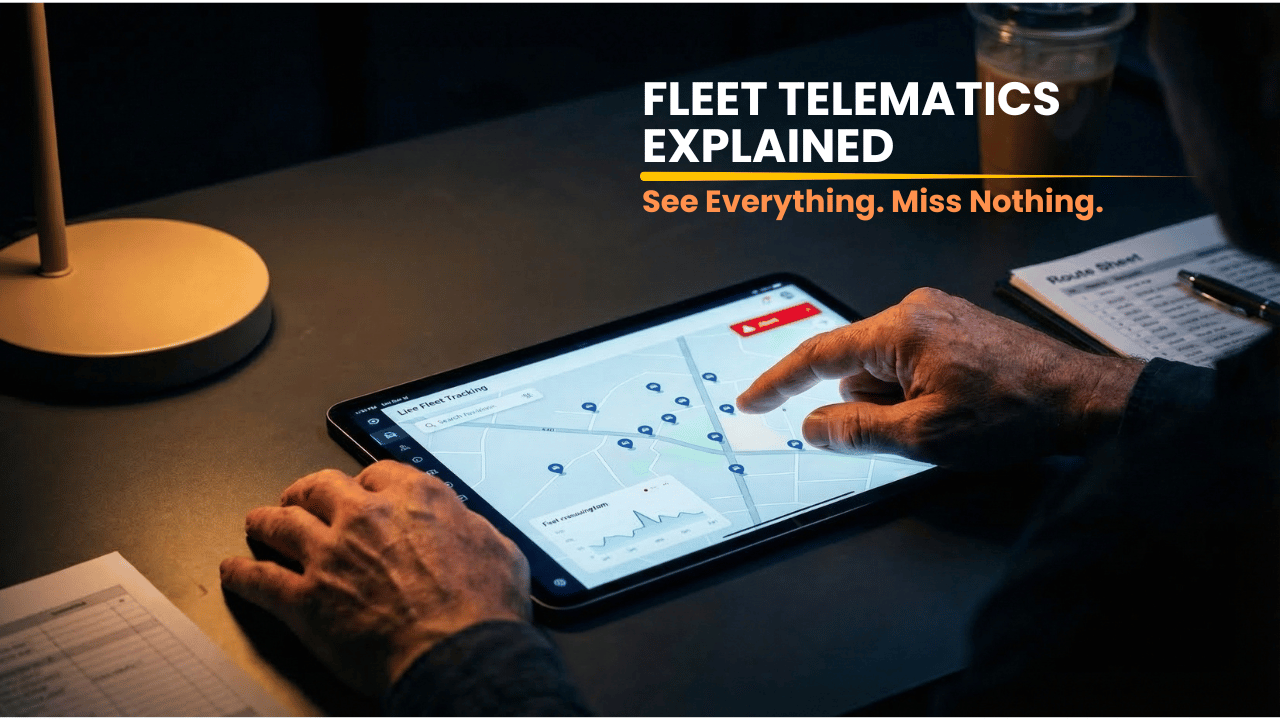
The technology behind that shift? Telematics. And if you're running a fleet and still figuring out what telematics actually means, this is the only guide you need.
FleetFlow brings that layer into a practical taxi fleet management platform where telematics, dispatch, billing, and reporting support the same workflow.
For broader market context, read the 2026 Taxi Dispatch Software & FHV Fleet Industry Report.
The Fleet That Was Bleeding Money in Silence
I was talking to a fleet operator running about 45 commercial vehicles across three cities. Decent operation. Experienced drivers. Enough clients to keep growing.
But something was off. Fuel costs kept climbing. Two vehicles broke down in the same week. One driver had three speeding complaints in a month. And nobody knew which routes were actually efficient and which ones were just 'the way we always go'.
He was managing the fleet the old way. Driver calls in when the trip starts. Calls again when it ends. Fuel receipts land on the desk every Friday. Maintenance happens when something breaks.
Reactive. Blind. Expensive.
When he finally installed telematics across all 45 vehicles, the picture changed in the first two weeks. He found one driver consistently idling for 40 minutes a day. Two vehicles had engine warnings that would have caused breakdowns within days. And one route his team used daily was 14 kilometers longer than an alternative the system surfaced.
That wasn't a software upgrade. That was seeing his fleet for the first time.
So What Is Telematics in Fleet Management?
Let me strip out the textbook language and explain the fleet telematics meaning in practical terms.
Telematics is the combination of GPS tracking, on-board diagnostics (OBD), sensors, and wireless data networks that collect real-time information from your vehicles and send it to a centralized platform where you can actually see what's happening across your entire fleet.
Think of it like this. Every vehicle in your fleet becomes a data source. It's constantly transmitting its location, speed, fuel consumption, engine status, braking patterns, and acceleration behavior. That raw data travels over cellular or satellite networks to a cloud platform. And that platform turns it into something useful: dashboards, alerts, reports, and actionable insights.
The fleet management telematics device itself is usually a small unit plugged into the vehicle's OBD port or hardwired into the electrical system. It reads onboard vehicle signals, pulls GPS coordinates, and measures driving dynamics through built-in accelerometers. Some advanced units even track cargo temperature, door open/close events, and seatbelt usage.
That's the fleet telematics definition in plain language. No magic. Just sensors, wireless networks, and software turning raw vehicle data into fleet intelligence.
How Telematics Systems Actually Work
Here's how a fleet telematics system works, step by step, from vehicle to your screen:
The entire loop from vehicle signal to dashboard update takes seconds. Not hours. Not 'end of day reports'. Seconds.
The 5 Pillars Where Telematics Changes Everything
The relationship between fleet management and telematics goes deeper than tracking. It restructures how you manage five core areas of your fleet. These are the five pillars of fleet management, and telematics sits at the center of all of them.
1. Vehicle Tracking and Visibility
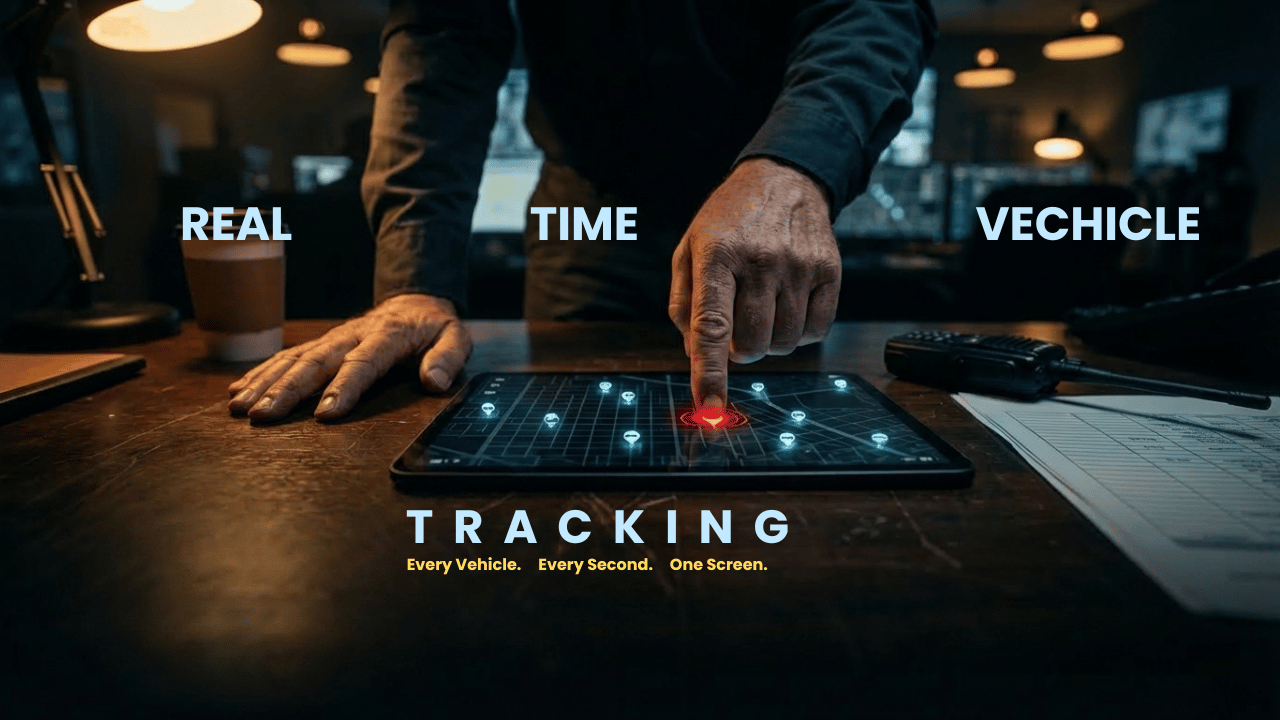
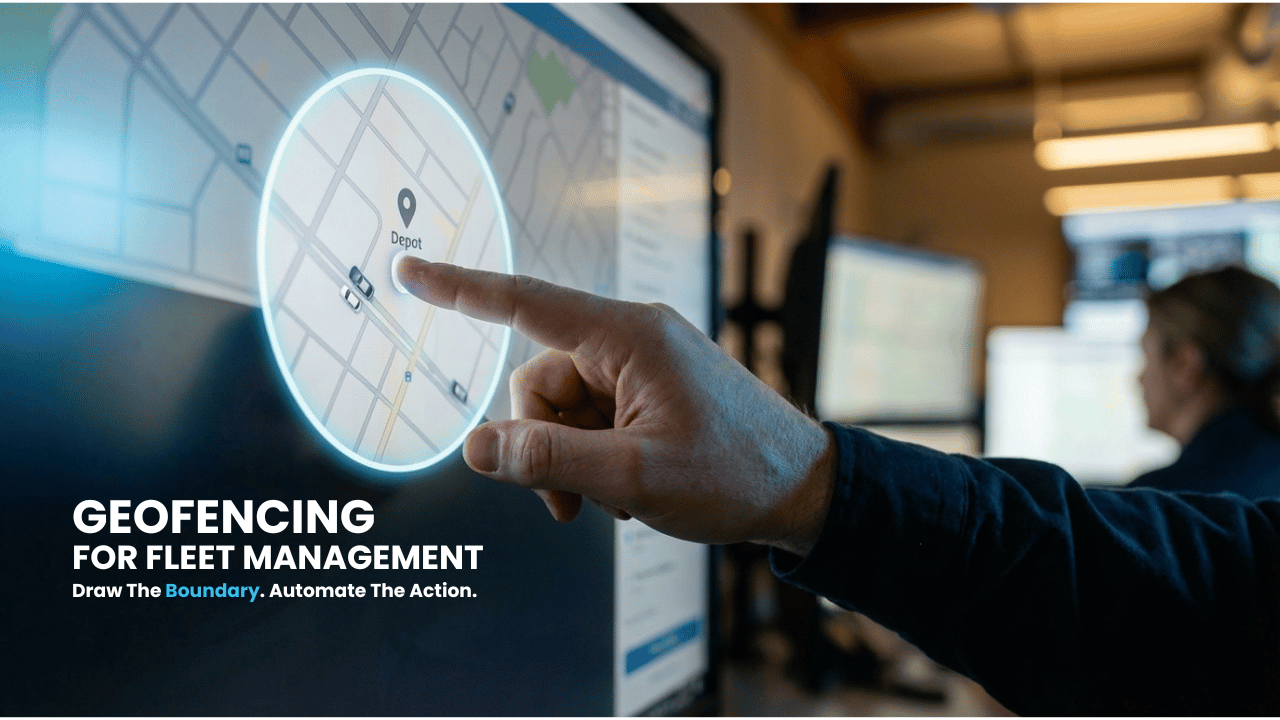
This is where most people start. GPS-based vehicle tracking lets you see every vehicle's location on a live map. But the real value goes deeper. You can replay routes, verify trip logs, set geofences around job sites or restricted zones, and get instant alerts when a vehicle moves outside expected areas. Platforms with live vehicle tracking built in give dispatchers a real-time operational picture without switching between tools. See how that visibility changes dispatch decisions, and how geofencing turns location data into action. For fleets already using GPS-based fleet tracking, this is the foundation that every other layer builds on.
2. Driver Behavior and Safety
Telematics monitors how each driver handles the vehicle. Harsh braking, rapid acceleration, sharp cornering, speeding, and excessive idling are all tracked and scored. The U.S. Department of Energy notes that aggressive driving can lower fuel efficiency by 15 to 30 percent at highway speeds. Driver behavior monitoring is not about catching people doing wrong. It's about identifying patterns before they become accidents. A driver who brakes hard 15 times a day is either tailgating or dealing with a brake issue. Either way, you need to know.
3. Fuel Management
Fuel is typically the second or third largest expense in fleet operations. Telematics tracks fuel consumption per vehicle, per trip, and per driver. It flags inefficiencies like excessive idling, aggressive driving that burns extra fuel, and route choices that add unnecessary kilometers. One fleet operator told me he saved 12% on monthly fuel costs within three months of going live. Not by switching fuel suppliers. By simply seeing where fuel was being wasted.
4. Vehicle Health and Maintenance
This is where OBD diagnostics become critical. The telematics device reads engine fault codes, tracks mileage intervals, monitors coolant temperature, battery voltage, and transmission performance. Instead of waiting for a breakdown, you get proactive alerts. 'Vehicle 17 needs an oil change in 300 kilometers.' 'Vehicle 09 has a diagnostic code suggesting a failing oxygen sensor.' For fleets operating under FMCSA regulations, this kind of proactive monitoring also supports compliance with scheduled inspection and maintenance requirements. Vehicle health monitoring shifts maintenance from reactive to predictive. And predictive maintenance is dramatically cheaper than roadside breakdowns.
5. Route Optimization and Dispatch Efficiency
Telematics data feeds directly into route planning. You can see which routes your drivers actually take versus the optimal path. You can identify traffic bottlenecks that cost hours every week. And when telematics integrates with a dispatch system, dispatchers can assign the closest vehicle to a new job based on live GPS data rather than guessing who's available. The impact on fleet efficiency is immediate and measurable.
What Telematics Data Actually Looks Like
Here's a snapshot of the fleet telematics data a platform collects per vehicle, every single day:
| Data Point | Source | What It Tells You |
|---|---|---|
| Live GPS Location | GPS Satellites | Where every vehicle is right now, updated every few seconds |
| Speed | GPS + OBD | Current and historical speed, with speeding event logs |
| Fuel Consumption | OBD Sensors | Liters per 100km, idling fuel burn, cost per trip |
| Engine Diagnostics | OBD-II Port | Fault codes, engine temperature, battery health, emissions data |
| Driver Behavior Score | Accelerometer + GPS | Braking events, acceleration patterns, cornering force, overall safety rating |
| Route History | GPS Track Log | Exact path driven, stops made, time at each location |
| Idling Duration | OBD + GPS | How long the vehicle was stationary with the engine running |
| Geofence Events | GPS + Platform Rules (custom triggers you set, e.g. 'if vehicle leaves depot zone after 8 PM, send alert to manager') | Entry and exit timestamps for defined zones like depots, client sites, or restricted areas |
Every row in that table is a data point that fleet managers used to either guess, ignore, or get from a phone call three hours late.
Telematics performance data replaces all of that with facts. In real time.
The Cost-Benefit Reality of Fleet Telematics
So let me give you the honest numbers.
A basic telematics device costs anywhere from $15 to $40 per vehicle per month, depending on features and contract terms. For a 40-vehicle fleet, that's roughly $600 to $1,600 a month.
Here's what fleet operators typically save in return:
- Fuel savings of 10-15%. By eliminating excessive idling, optimizing routes, and coaching out aggressive driving habits. On a 40-vehicle fleet spending $8,000 a month on fuel, that's $800 to $1,200 saved monthly.
- Maintenance cost reduction of 15-25%. Predictive maintenance catches issues early. Replacing an oxygen sensor for $150 is cheaper than a $3,000 engine repair from ignoring the warning for six weeks.
- Insurance premium reductions. Many insurers offer lower rates for telematics-equipped fleets because the accident risk data is demonstrably better. Some operators report 5-10% premium reductions. The discount rewards the documented data, not the device, so see how to reduce fleet insurance costs for the full operator playbook.
- Fewer unauthorized vehicle uses. Geofencing and after-hours alerts eliminate personal use of company vehicles. One fleet owner discovered 22 hours of unauthorized weekend driving across his fleet in the first month alone.
The math is not complicated. The return almost always exceeds the investment within the first 60 to 90 days.
How to Implement Fleet Telematics Step by Step
If you're ready to move on this, here's the actual implementation process. No fluff.
- Step 1: Define your priorities. Are you solving for fuel waste? Driver safety? Maintenance costs? Route inefficiency? Pick the top two problems. That determines what features matter most.
- Step 2: Choose the right telematics platform. You need a system that integrates with your existing fleet management tools. Look for real-time GPS tracking, OBD-II diagnostics, driver scoring, fuel reports, and an API that connects to your dispatch or billing software.
- Step 3: Install devices across your fleet. OBD plug-in devices take about 5 minutes per vehicle. Hardwired units take 30 to 60 minutes but offer tamper resistance. Start with a pilot group of 5 to 10 vehicles before rolling out fleet-wide.
- Step 4: Configure alerts and dashboards. Set thresholds for speeding, idling, geofence zones, and maintenance intervals. Build driver scorecards. Create daily and weekly summary reports for operations managers.
- Step 5: Train your team. Drivers need to understand what's being tracked and why. Frame telematics as a safety and fairness tool, not a surveillance system. When drivers see that telematics data protects them in false accident claims and rewards good driving behavior, the 'Big Brother' resistance disappears. Dispatchers need to use the live map. Managers need to read the reports and act on them. Technology without adoption is expensive decoration.
The Reality Check
Here's the part nobody tells you.
Telematics is not a set-and-forget solution. You don't plug in the devices and watch the savings roll in automatically.
The technology gives you visibility. But visibility without action is just expensive monitoring.
If you see a driver idling 45 minutes a day and don't have the conversation, nothing changes. If the system flags a maintenance alert and your team ignores it for three weeks, the breakdown still happens. If your dispatchers have live GPS data but still assign jobs based on gut feeling instead of proximity, your route efficiency stays exactly where it is.
Telematics works when you build processes around the data. When someone owns the dashboard. When driver coaching happens weekly, not quarterly. When maintenance alerts trigger work orders, not emails that sit in an inbox.
The best fleet operators I've seen treat telematics as an operating system for their business, not just a tracking tool. They use it alongside their fleet software architecture to create closed loops. Data comes in, decisions go out, results get measured, adjustments follow.
That's the difference between a fleet that has telematics and a fleet that actually uses it.
Where Telematics Is Headed Next
The technology is moving fast. And if you're making a decision today, it helps to know what's coming.
AI-powered telematics platforms are already starting to predict driver fatigue based on behavioral patterns. Predictive maintenance algorithms are getting accurate enough to tell you not just that a part will fail, but when. Some systems are integrating with advanced analytics dashboards that auto-generate optimization recommendations, things like 'if you swap Vehicle 12 and Vehicle 23 between these two routes, you save 340 kilometers a week'.
Electric vehicle fleet management is also creating new telematics requirements. Battery state of charge, range prediction, charging station routing, and energy consumption per route are all becoming standard data points alongside traditional GPS and OBD metrics. The DOE Alternative Fuels Data Center already tracks how driving behavior and route choices impact energy consumption across both ICE and EV fleets, making telematics data even more critical for mixed-fleet operators.
The fleets that invest in telematics infrastructure now are not just solving today's problems. They're building the data foundation for tomorrow's capabilities.
One Last Thought
I keep coming back to that fleet operator with 45 vehicles who didn't know where his money was going.
He wasn't careless. He wasn't bad at his job. He just didn't have the data. He was managing a modern fleet with methods from a decade ago.
Telematics gave him sight. But what actually changed his business was what he did once he could see.
If you're running a fleet today, whether it's 10 vehicles or 500, the question is not whether telematics is worth it. The question is how long you're willing to operate without the data that could be saving you thousands every month.
The automation principles are the same across every fleet function. Replace the guesswork with data. Replace the manual with the automatic. And free up your team to do the work that actually needs a human brain.
Telematics doesn't just track your vehicles. It tells you the truth about your fleet.
And once you've heard that truth, you can't go back to guessing.
Frequently Asked Questions
What is telematics in fleet management?
Telematics in fleet management is the use of GPS, on-board diagnostics (OBD), sensors, and wireless networks to collect and transmit real-time vehicle data to a centralized platform. It gives fleet operators live visibility into vehicle locations, driver behavior, fuel consumption, engine health, and route efficiency, all without relying on manual reports or phone calls.
How do telematics systems work?
A telematics system works by installing a small device in each vehicle that connects to the OBD port or is hardwired into the vehicle's electrical system. This device collects data from GPS satellites for location, from engine sensors for diagnostics, and from accelerometers for driving behavior. It then transmits this data over cellular or satellite networks to a cloud-based platform where fleet managers can view dashboards, set alerts, and generate reports.
What are examples of telematics?
Examples of telematics include real-time GPS vehicle tracking, driver behavior monitoring for harsh braking and speeding, fuel usage tracking per vehicle, engine diagnostic alerts for maintenance scheduling, route optimization based on traffic data, and geofencing alerts when vehicles enter or leave defined zones. In commercial fleets, telematics also covers hours-of-service compliance and cargo temperature monitoring.
What is the purpose of telematics?
The purpose of telematics is to give fleet operators complete, real-time visibility over their vehicles and drivers without being physically present. It replaces guesswork with data. Operators can see exactly where every vehicle is, how it is being driven, whether it needs maintenance, and how much fuel it is consuming. This leads to lower costs, safer operations, and higher fleet efficiency.
What are the 5 pillars of fleet management?
The five pillars of fleet management are vehicle tracking and visibility, driver behavior and safety, fuel management, vehicle maintenance and health monitoring, and route optimization and dispatch efficiency. Telematics acts as the backbone that connects all five pillars by feeding live data into each area, making it possible to manage them from a single platform rather than in isolated silos.